Thursday, March 29, 2012

Peppers El Padrón - Spanish Roulette


The buds on the street side bushes in town have turned into small leaves almost as green as the peppers El Padrón, my eyes registered on my way home today…and it is only end of March!

Still suffering from a cold that had suddenly hit me this week, all I could manage today was a quick mid-week roulette...despite the modest energy level I was full of excitement and anticipation of a long awaited taste bomb or at least a great mouthful.

The green thumb sized peppers come from the Galicia region in north west of Spain. They are the simplest of the simple dish to prepare and can be eaten as finger food tapas, a starter or a side dish.
All you need to do is to heat some olive oil in a grill pan, throw a handful of peppers in and toss them around a couple of times until they take on a grilled colour. At the end sprinkle some flaked salt (I used Maldon salt) on the peppers and ready to serve it is.

Pimientos - Peppers El Padrón, grilled with olive oil and sea salt
The fun is in the eating. Most of the Padrón peppers are sweet, but occasionally one can come across an explosive hot one. So far, fortunately or unfortunately, I’ve never been surprised by this small vegetable. I am told the ones grown in Murcia region are usually less hot…until next time.

When with friends you can play a game where someone who gets the spicy hot one has to do something as a challenge set by others.

Sunday, March 25, 2012

Red Snapper on Wild Garlic (Ramsons) Risotto

Wild garlic - a leafy spring herb

The spring started this week. The proof of it is all the fresh greens in the market as well as the buds on the trees and birds collecting small branches from my balcony to make nests.
Spring is here when the ramsons, aka bear’s garlic, arrive on the farmers´ market.
The ramsons make a refreshing pesto, a welcome competition to the traditional basil. A heap of flavour together with a prominent garlic taste all in one.
Dandellion
I am glad to see that there are greens that I don’t really know so well. More discoveries are awaiting if I get up early enough. This is how empty the market already is at 11:30.
Vegetable market in March
 

Ingredients for 2 portions

Ramsons Risotto:
50g ramsons leaves, the white ends removed
0.5dl olive oil
A pinch of sea salt or fleure de sel

3 tablespoons olive oil
1 medium small onion, finely chopped
1 dl of white wine or prosecco
4 good handfuls of carnaroli rice
0.5l vegetable bouillon
25g cold butter

Red snapper:
300g red snapper fillet
Salt, pepper
A little oil for the pan
Ramsons for the pesto

In a food processor or with a hand mixer crush the ramsons together with a pinch of salt and the olive oil into a pesto paste. Set aside for later.

Keep the hot bouillon at hand. Rinse the fish and dry it with the kitchen paper. Season the fish with salt and pepper and cut the filet into desired size pieces, more or less equal in size to ensure it cooks evenly. Set aside. Heat the oven to 130ºC.

Heat the oil in the risotto pan and cook the onion until a bit glassy. Add the rice and heat further. Splash the white wine or prosecco generously on the rice and let it evaporate. Slowly start adding some bouillon, not too much at a time. Stir with a wooden spoon. When the liquid reduces add some more bouillon and keep stirring frequently. When the risotto is almost done add the ramsons pesto, stir and cook until the rice is al dente.

Heat the grill pan with a little oil. Place the fish on the pan and cook for a couple of minutes on each side. Put the pan in the oven for 5 minutes.

Finish off the risotto by stirring cold butter into the risotto to make it creamy. When serving the risotto with fish I don’t add any parmesan.

Remove the fish from the oven and serve hot.
Bear´s (wild) garlic risotto and red snapper


Sunday, March 18, 2012

Quinoa Salad, Gluten Free

More and more I hear about gluten intolerance and celiac disease. Fortunately for those intolerant of gluten more and more gluten free products appear in the food stores, more often I’ve seen “gluten-free” on restaurant menus and more and more food blogs are devoted to gluten free cooking. Here are two that I like and that most optimistically show that there is pleasure in eating for those who can’t eat wheat, rye or barley:
http://glutenfreegirl.com
Dry quinoa on the left, cooked on the right
My sister acquainted me with quinoa last year. I’d seen it on the shelves of a top end supermarket, but never cooked it myself. There are different kinds of quinoa, white, red or black are what I’ve seen and recently a new tricolour product appeared in the supermarket. Quinoa is sold in the Swiss supermarkets as a bio product, in Estonia one can also find it in organic or bio food shops but is seems to be more expensive there.

Quinoa is not really a grain, but seeds of a leafy green plant. It originates in South America where people have grown it for a few thousands of years. No wonder because it has high nutrition value. It can be used in salads or eaten warm as a side or it may be an ingredient in a main dish. I do wonder how the Incas ate it…

For a healthy lunch here is a very easy quinoa salad for two.

Ingredients:
150g of quinoa
0.5 l water
Half a cucumber cut into small cubes
Half a red paprika/bell pepper cut into small cubes
5-10 sundried tomatoes cut into thin stripes
Sauce:
3 tablespoons extra virgin olive oil or rape seed oil
Juice of a quarter of a lemon
A pinch of sugar or honey
Salt and pepper

Bring the water to boil and cook the quinoa until the little tails emerge and the grains are soft for about 15 minutes (check instructions on the pack too). In the meanwhile cut the vegetables and prepare the sauce by mixing the ingredients.

When the quinoa is soft, rinse with cold water and leave to cool. Mix the vegetables and the quinoa and the sauce. Garnish with chopped parsley or chives. The salad is ready to serve. 
Quinoa salad

Variation: add some smoked trout for a more substantial meal or mix any other ingredients you have at hand (sliced black olives, capers, scallions, roasted pumpkin, etc, etc).

Sunday, March 11, 2012

Birthday Presents: pasta machine and handmade chocolates

It is customary to bring a present when going to a birthday. A pasta machine and the pasta drying rack it was for my foodista cake magician sister.

Big were my eyeballs when we received a present from the birthday girl - an artistic box of chocolates. I took a peek inside, the chocolates were jaw dropping. The value of the box shot up the instance when I heard that the birthday girl had made these chocolates herself.

A selection of handmade chocolates

In addition to a white and dark chocolate mousse and buckthorn juice jelly birthday cake that melted on our tongues and caused hightened saliva production with every mouthful, we pampered our taste buds with these handmade chocolates:


A sweet present for the birthday guests

White chocolates with fresh cream, lemon and poppy seeds
Dark chocolates with prune drowned in brandy and coconut paste
Dark chocolate with fig and/or marzipan

Designer chocolate

I have been travelling this week and haven´t done much cooking. I have been eating out a lot, picking up new taste memories in six new places in the UK and Estonia. I am happy to spend money on eating out when the quality and price are in balance with each other and with my expectations.

The week has provided opportunities to distinguish between the good and the bad. The disappointment of the week has been Kama House in Tallinn. The place in an old industrial building  is great but food and service when I visited provided a long list of disappointments for the visitors at our table. The great thing on Tallinn food scene is that new eateries pop up every now and then and provide a lot of possibility to hunt for something new unlike my Swiss home town where the gastronomic curiosity is floating on a quiet waveless sea. Clear, there are great places for eating out, some that never disappoint me, but the newness and discovery peaks in the seasonal change of the specials. Let´s see what this spring brings...

Sunday, March 4, 2012

Mutabal and Uzbekistan in Moscow

Moscow, a world city with modern designer shops, famous department stores GUM and TZUM with a serious facelift since Soviet time, one of the highest concentrations of 4-wheel drives per square kilometre, snail paced traffic jams, city centre restaurants mainly catering foreigners, business is booming. Flights to and from Moscow are fully booked. The rows of business class seats that shrank to 3-4 during the economic crisis have expanded back to 15, the economy class is packed.
GUM Department store and the skating rink at the Red Square
If you live in Moscow and wonder what to do on a winter Sunday afternoon you may think “Oh, let’s go skating at the Red Square and have a hot chocolate at the rink afterwards”.

The famous Bolshoi Theatre re-opened recently the doors and the stage after a thorough renovation. We stepped in only to be faced with the airport type security gate and men in black with metal detectors. We saw the stairs inside and let it at that for now.
The Bolshoi Theatre in Moscow
After the walk on the Red Square, the visit to the Bolshoi Theatre we arrived in Uzbekistan. Uzbekistan used to be one of the Soviet Republics, now a country of 29 million people and a restaurant in Moscow. Step through the massive doors and you are in another world. Live Russian 80s music, belly dancers, waiters and waitresses in the national dress…
The rich menu started with two pages of vegetarian dishes (how unusual!), followed by Uzbek, Arab, Azerbaijan and Chinese starters, soups, main dishes. We started off with an appetizer selection of mutabal, tabbouleh, hummus and filled grape leaves. I would go back any time for the typical round Uzbek bread cooked in their special oven and decorated with black sesame seeds. I had a lamb shashlik that melted in my mouth, a colleague of mine took beef shashlik that was equally worth the some 1000 Roubles.

What caught my attention was that there was mutabal, an eggplant dip, as well as baba ganoush, also an eggplant dip, on the menu. The difference of the two as I found out afterwards is that the mutabal is made with tahini and yoghurt and the baba ganoush or baba ganouj is made with pomegranate, walnuts, tomato. Or, who knows…the mutabal served in Uzbekistan was served with oil and walnuts.
Mutabal, eggplant dip

Mutabal

Ingredients
2 medium small eggplants
1 garlic clove
1tablespoon lemon juice (optional)
1 tablespoon tahini paste
1-2 tablespoons yoghurt nature
Salt
Olive oil
Grill the whole aubergines on the real flame or in the hot oven grill (250°C) for ca 30 minutes until the skin blackened and the inside is soft. Turn them around in between. You may put the aubergines into a bowl and cover it with a plastic bag for 15 minutes in the same way as you would remove the skin from the grilled peppers. Cut open and spoon out the soft eggplant. Mash into a paste with a fork.
Add crushed garlic and a little lemon juice, mix. Let cool. Mix in the tahini paste, yoghurt and salt to taste.
Place the mixture onto a serving dish and drizzle some olive oil on it and chopped parsley if at hand.
Mutabal, typical in the Middle East and Central Asia

Sunday, February 26, 2012

For the Mustard Lovers: Mustard Soup, Simple


Dutch mustard soup
The Dutch are a special nation. They live, at least partly, below sea level, their geographic location is fairly free from disease carrying insects and therefore well placed for growing seeds, seed potatoes, grain seed, grass seed. They have conquered the tulip bulb market and much of the flower market. They sell tulips in bunches of 25 and roses in bunches of a dozen and they are cheap. I mention this because in Switzerland bouquets often come with 3-4 flowers and a lot of green stuff like leaves, branches, meadow grass and are overpriced for that. In Holland it was not unusual that I had 50 tulips or 20 roses at home and just for pocket money.

They’ve enriched the language with several phrases related to drinking and eating behaviour like "Dutch courage" or "Going Dutch". The only two nations I know of  that drink a lot of milk and butter milk -I mean grown-ups not just children - are the Dutch and the Estonians.
The Dutch have lovely deep fried croquettes that may be eaten between a sandwich, they eat sandwiches with a fork and knife (Is that why their bread is so soft?), they have top class herring, plenty of smoked eel and small prawns…
They make soup out of mustard. I haven’t found another nation who makes a soup out of a favourite condiment. Anyone know of popular soy sauce or ketchup soup? I managed to get addicted to Dutch mustard soup when I lived in Amsterdam. The company canteen served mustard soup on a weekly basis and the milk and butter milk was free and still is.Variations to the classic recipe exist. My other favourite is mustard soup with spinach.

The mustard soup is ready in less than 30 minutes.

Ingredients:
70g smoked bacon or smoked meat, cut into thin stripes
1 medium shallot, finely chopped
3 tbsp rape seed oil or 25g butter
1 tsp mustard seeds
1 tbsp grainy mustard
1 tbsp smooth mustard
3 level tbsp all purpose flour
1 l chicken bouillon
100g crème fraîche or fresh cream
Chopped parsley or green leek to garnish
In a hot pan fry the bacon for a couple of minutes. Add the oil or butter, the mustard seeds and the onion. Cook until the onion is slightly softer. Add the flour and mix it with the onion and fat. Then add the mustards. Slowly mix in the hot bouillon stirring constantly in the beginning to smooth the flour. Simmer for 10 minutes until the soup thickens.

Eet smakelijk!
The mustard seeds in the soup give a little crunchiness to the bite

Sunday, February 12, 2012

“Vastlad” in Estonia with traditional pig’s trotters and beans and hills of whipped cream


Fastewaie or Fastewähe, original with cumin, traditional at Swiss Basler Fasnacht
In many countries the coming week brings various forms of pre-fasting festivities like Fasnacht in Switzerland, Carnival... The Tuesday, 21st is "Vastlapäev" in Estonia, a day in the Estonian national calendar and dates back centuries. It is a moving national day and falls on the Tuesday 7 weeks before the Easter. In England this day is called the Shrove Tuesday or Pancake Day if I rightly remember from my 5th grade English textbook.
Swiss Fasnacht treat: Fasnachtchüechli or Merveilles
Now the origin of this day in Estonia is somewhat controversial. Some sources reference the old religious influence and there is significant evidence to it for sure. However, a Christian website refers to this day as a pagan tradition and there is a lot of truth to that too considering the typical activities, superstitious to an extent, that people used to do on that day to ensure they got all sorts of happiness coming their way that year. Here is a selection of such:
-         Children, young people and grown-ups all competed for the longest ride on a sledge down a hill – the winner would grow the longest flax which used to be a popular fabric material in the old days. The ride is popular now too whilst the length of the flax has as little meaning to anyone now as Facebook would have been to people centuries ago.
-         You were supposed to comb your hair for 7 times to make sure your hair grew well and nice.
-         This was a women’s holiday. Some typical women’s work was prohibited. Women went to the pub and men stayed home to do the housework.
-         In some sea side areas people sang special songs to invite fish into their waters on that day.

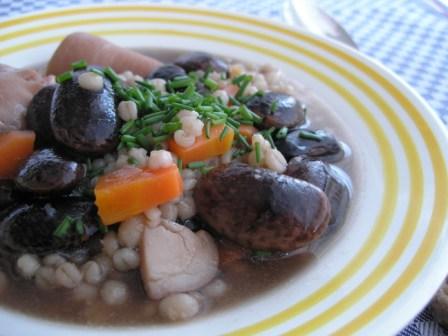
Special traditional food was eaten on Vastlapäev. The pig’s feet or pig’s head and beans and / or peas were a must, served as soup or cooked together in other ways. The pig’s tail is said to have been a special treat for the head of the family. Typical barley bread belonged to the menu and in more recent times up until now  “ vastlakuklid”, fresh buns made from wheat flour and topped or filled (I prefer these!) with whipped cream (lots, please!) are the most popular item. One can see Moms and everyone else too standing in the queues of the best bakeries on that day, especially in the morning as you want make sure you get some ( I mean enough!) , and walking around in the streets with boxes in their hands. Be sure they are full of these buns with whipped cream. My view is that one can be generous on that special day and it is allowed to whip some extra cream and add on the bun during the eating process.
Vastlakuklid in Estonia
Bean soup

1-2 pig´s trotters, smoked or fresh ribs or a pig’s tail
300g beans, soaked overnight, drained
1 whole carrot
1 onion, halved
Parsley
3 bay leaves
10 black pepper corns
150g barley, soaked and drained
1 carrot cut in small cubes
1-2 teaspoons salt
Pig´s tail and trotters

Rinse the meat pieces and place them into a big cooking pot with cold water. Heat up and remove the scum. Change the water after removing the scum and add the bay leaves, pepper corns, onion, one full carrot and parsley stems without the leaves. Bring to boil and simmer for 1.5 hours until the meat is soft. Remove the parsley, onion, carrot and pepper corns from the broth. Add the beans and the barley and simmer for 1 hour or until soft. Cut the other carrot into small cubes and when beans are almost soft, add the carrot to the soup.
Either cut the meat from the bones and place back into the soup or for more fun leave them in the soup for the eaters to manage the bones and the meat.
Garnish with chopped parsley or chives.
Bean and barley soup, traditional in Estonia

This soup supports the philosophy of if you kill, eat all from head to tail.

Sunday, February 5, 2012

Farmers´ Market in winter, a very cold one too: Warm up with Salsify Cream Soup

Rustic luxury: black roots of salsify (German: Schwarzwurzel)
My walk-around last Saturday at the farmers market was brightened by long awaited snow or rather small flakes in the air that turned into wet drops on the street.  I was happy to see the winter finally arrive to the city. This week the cold from Siberia reached Switzerland and temperatures dived to the freezing -10°C in town and over -20°C in the mountains. Only a third of the usual stands were out trading in this cold, all wrapped into temporary plastic “walls”. Luckily for me snow has stayed in town and I am fully enjoying this until it lasts. You see, I am the exception to the general rule here and don’t go skiing or snowboarding in the mountains. In the Alps there is plenty of snow of course and much colder too, but for me winter is not winter if there is no snow or minimum a week of minus temperatures down in town.
Even though I like winter I don’t envy my friends in Estonia who are fighting -30s °Celsius this week. The cars won’t start, those living in houses with own wood heating have to heat and heat to keep the temperature at 13°C !!! Hang in there!!

My basic tips on how not to freeze completely in -30°C:
-wear a hat, gloves (sometimes two pairs) and plenty of layers
-wear lamb wool, cotton jumper is not warm
-breathe through the nose, occasionally rub your nose and cheeks
-go out only if really necessary and then walk fast
-when back inside and not really feeling your toes and fingers, warm up your fingers by keeping your hands under your arms, take off the socks and warm your feet against a family member’s warm body. Putting your feet against the heating will be painful! Luke warm water is another alternative to get life back in the limbs.

Soup will warm up the inside with added benefits. Cooking it will heat up the kitchen, you could use up some simple ingredients from the fridge (an onion or some bacon, a can of tomatoes), the freezer (peas maybe?) and the cupboard (lentils, a bay leaf), it has less calories and is easier to digest given the circumstances of being forced to inside activities and spending less calories.

Back to the winter market…
…Dreaming of a hot bowl of soup I was on the look-out for salsify, also known as winter asparagus or poor man’s asparagus because of the taste and their similar diuretic effects. In German it is called Scwarzwurzel and its name in Estonian is a similar translation meaning black root or mustjuur. In English it is to my surprise and puzzlement also known as oyster plant or vegetable oyster. Hmm, why do the German speakers associate salsify with asparagus and the English speaking world finds it similar to oysters? I taste rather asparagus than oysters. Not sure if it has anything to do with the fact that I live in Switzerland where oysters are rare to form strong taste memories about. Still one commonality exists, both cultures compare this from outside not quite appetising root to something rather luxurious.

You won’t find salsify in a supermarket in the Swiss capital...yet. It is a niche vegetable, quite popular amongst the fans of country food or occasionally on offer in top restaurants.

Keep raw salsify in vinegar water

How to easily peel salsify
Peeling the raw roots with a knife is tiresome and the peeled vegetables must be immediately put in water with some vinegar or lemon juice to avoid the browning. An easy way to peel the black root is to wash off the soil and cook it in boiling salt water for 10-15 minutes. Now it is as easy to peel as a cooked carrot or potato. Pull off the peel and cut out the eyes with a small  knife.

Cream of Salsify Recipe

500g salsify
0.5l chicken broth or water + 1 cube of bouillon
Bay leaf
10 cm white leek cut in 1 cm length
2 dl milk
2 tablespoons crème fraîche
2 leaves of green leek
Cooking oil
1 small chorizo picante (optional)

Bring the broth to boil, add the peeled salsify cut into smaller pieces, the bay leaf, white part of the leek and cook for 15-20 minutes till the roots are soft.
Purée with the hand mixer or blender and return into the pan. Add the milk to get the desired thickness of the soup. Stir in the crème fraîche and season to taste.

Garnish with leek julienne and spicy chorizo

Cut the leek greens into thin julienne. Heat the oil in the pan and throw in the leek. Sizzle the leeks for a few minutes until crisp but not burnt and scoop out onto kitchen paper.

If you prefer a heartier meal, cook some rings of chorizo picante or some sliced bacon in a separate pan and add on top.
Salsify cream soup with crispy leek and chorizo

Sunday, January 29, 2012

Food wasting: Shocking Statistics. Left-over breakfast recipe: Pumpkin pancakes

Jams in my fridge and honey
I was going through my thoughts and notes on what to blog about this time when the alarm bells hit my ears on the evening news program: the European Commission has recently published statistics that 89 million tons of usable food is annually wasted  across EU27. That food is wasted by households (42%), by production and processing (39%), by catering establishments (14%) and by retail (5%). If we continue this way there will be 126 million tons of food wasted per year by 2020. Outrageous statistics and bad behaviour!

“Best before” or “Consume by” are two different things.
Indeed consuming fresh dairy or meat products with a passed “Consume by” date can cause health problems and I wouldn’t advise anyone to do it, however “Best before” just denotes until when the quality of that product is best and not when it becomes unusable. It is easy to mix up these two, but picturing 3,5 million trailer trucks full of wasted food that is generated in European Union the distinction between the two can make a whole lot of difference. All these trucks standing behind each other are more than enough to make a trip around the Equator. On top of the issue of wasting food that people can eat, how does the environment cope with the mountain of waste?
If foods with a past best before date have been stored in good conditions, the food is likely to be good for some time.
In many countries there are organisations that collect and distribute the food close to “Consume by” and “Best Before” dates to people and organisations in need. In Switzerland a few of my colleagues and I worked with one of such -"Schweizer Tafel"- last year. In my home country there is a similar "Estonian Food Bank".

I hereby reach out to the readers and ask to please support in the ways small or big available to you to help reduce the food waste.

Tips on how to reduce waste and turn leftovers into tasty ingredients:

- Leftovers from the fridge (eg. slightly wilted vegetables) or dry goods cupboard (eg. lentils and beans past “Best before” date) make wonderful soups, stews or pancakes
- Pasta stores long after the best before date
- Dinner leftovers make a good lunch the next day
- It is worth checking the inside of canned foods past “Best before” date before just throwing them away
- Cut the old rye bread –very popular in Estonia – into small cubes, roast in the oven and eat as a healthy snack alternative, but DON´T eat the mouldy old bread.
-Make croutons or bread crumbs from the hardened white bread
-Check the freshness of the eggs by carefully dropping an egg into a glass filled with cold water. If the egg drops to the bottom it is good to eat, if it stays on the top it is not fresh.
Check eggs for freshness: The egg at the bottom is fresh

Pumpkin Pancakes

To use up an egg or two that has been in the fridge for some time and a piece of pumpkin try these pancakes for breakfast with a mug of freshly brewed coffee.

Ingredients

2 eggs
250g pumpkin of any type
120g flour (1 cup)
0.5tl baking soda if you wish to make small thick pancakes
1.5 dl butter milk or fresh milk
a pinch of salt
1 teaspoon sugar
Rape seed oil or sunflower oil for frying

Grated pumpkin adds colour

Mix the eggs, salt and sugar with a fork, add some milk and mix again. Add the flour and baking soda, mix again. Leave a little milk for later or add some water if the dough becomes too thick. As last add the thinly grated pumpkin. Mix everything. Let rest for 10-15 minutes for the flour to expand.
Heat some oil in a shallow frying pan and fry either small pancakes or crepe-type over the pan pancakes.
Serve with honey or jam. There may be some jars of jam open in the fridge that are waiting to be eaten and not eventually thrown away.
Fluffy pumpkin/squash pancackes

Sunday, January 22, 2012

Every Nation Enjoys Their Comfort Food: Dutch Mashed Potatoes with Kale (Boerenkool)

This week my work travel took me to Schagen in the Netherlands where I spent a couple of days with seed potato growers from Scotland, England, Poland and Holland as well as my equally international colleagues. We had been visiting potato grading stations and warehouses in the unfriendly weather with a brief glimpse into a windmill that tamed the heavy wind into flour for a local bakery. For the first time I visited a greenhouse where 1.000.000 tulips were being grown at a time. The farmer’s wife was not so keen on the bulbs but rather on tourism and had set up a complementing business branch providing tulip excursions. The excursion started with hot coffee and a selection of fresh cakes from the bakery that was as heart-warming to the freezing group as the first snowdrops in front of my house in the middle of January.
Dutch tulips grown in soil, not in hydroponics (Blackberry photo quality)


As we travelled in the car to the tulip greenhouse we passed a field where unusual green plants were growing. It was curly kale or boerenkool in Dutch or Federkohl in German. This type of cabbage is in season only in winter. My Dutch colleague told me that they eat boerenkool with mashed potatoes and sausage. It sounded as a delicious comfort food cooked and enjoyed by Dutch families. I promised to try it. The cooking instructions were quite general and I deliberately did not search on the web for such recipes. The nature of this true example of the northern potato-cabbage dish sounded simple and I jumped to the experiment after I was lucky to find some kale still on sale at the Saturday farmers´ market.

There was one challenge – the onions! How did Meryl Streep in the role of Julia Child manage to slice the pile of onions almost as high as the Eiffel Tower without destroying her make-up or displaying any signs of tears? My trick of not crying over the onions has been the simple ventilation above the stove. Since it is broken now I was faced with a task and a question how do I do it without ending up in a mess of rabbit eyes and running mascara.

Apparently there is always a reason for things to happen when they happen. This morning I was reading How Not To Cry on Clotilde Dusoulier´s Chocolate & Zucchini e voilà, I found a perfect opportunity to try out some tips. This time I picked the "spoon in the mouth" and was hoping not to cry. Slicing the onion trying to manoeuvre with the knife and balance the spoon in my mouth was a challenge, but I DID NOT CRY!


Shopping list:
1 kg of starchy potatoes (eg Agria)
200 g of kale (Boerenkool/Federkohl)
200 g sausage cut into bite size pieces
0.5 dl or 2 tablespoons fresh cream
1 medium large onion
Rape seed oil
Salt, pepper


Peel and cut the potatoes into bigger pieces, chop the cabbage into smaller pieces.
Pour a little rape seed oil into a cooking pot. Add the potatoes, cabbage and 0.5l water or bouillon. Add some salt or 1 cube of bouillon when using water.

Bring to boil and reduce heat. Simmer for ca 20 minutes until the vegetables are soft. Then mash the potatoes together with kale. I only mashed slightly to keep a bit chunky.
Add the sausage and cream and heat up again.

The last thing left to do is the onion. In a separate pan heat 2-3 tablespoons of rape oil and sauté the sliced onion until golden. Add a pinch of salt to the onion if you prefer.

Serve the creamy mash with the onions.

Sunday, January 15, 2012

Estonian Apple Crumble Cake

Apple Crumble Cake
A weekend deserves a sweet treat. Even if the extra kilos that have accumulated around the hip-waist line like a life saving ring since Christmas and New Year’s festivities. A piece of cake fresh from the oven to keep up the good spirit eaten with moderation is allowed.

In Switzerland January is the season for storage apples and pears.

In Estonia it is the season for storage apples. Pears don’t store well in Estonia and one can’t find locally grown pears on the grocery store shelves, at least I think I have never seen any. Even locally grown apples in winter months are something that with the spreading fashion of “Grown and produced in Estonia”- food that is gaining popularity amongst foodies and home cooks are only recently becoming more widely available. The price versus Polish imported apples is often times higher, but the availability is a positive sign and overtime hopefully the price will respond to competition.

Apple Crumble Cake

For the dough:
125g soft butter
100g sugar
1 big egg (63g+)
250g plain wheat flour
1 teaspoon baking powder
1 pinch of salt

For the filling:
Ca 5 big sweet apples (eg. Golden Delicious), so less added sugar is needed
For the crumble:
75g butter
5-6 tablespoons sugar
150g flour
a pinch of baking powder
0.5 -1 teaspoon cinnamon


Mix well the butter and sugar with a hand mixer, add the egg and mix again. Stir the baking powder and salt into the flour and add to the sweet butter mixture. Mix everything together until the dough has formed. Form it into a ball with your hands and keep refrigerated until you prepare the apples.

Preheat the oven to 200C.

Peel the apples, if you prefer, clean the seeds out and cut the apples into smaller cubes.

Fit the 26cm diameter baking ring form with baking paper and spread the dough evenly on the bottom. Precook the bottom for 15 minutes.

In the meanwhile, for the crumble melt the butter. Mix the flour with sugar, baking powder and cinnamon and pour the melted butter on the flour mix. Form crumbles with a knife or your hands quickly.

Spread the apples and then the crumble on the cake and bake in the middle of the oven for 35-45 minutes until the crumble starts to brown slightly on top.
Apple Crumble Cake (Estonian: Õuna-purukook, German: Apfel-Streuselkuchen)

A number of crumble recipes call for cold butter for the crumble but whenever I use cold butter the butter in my crumble just melts and the result is not very attractive or crispy. Therefore I use melted butter. If anyone has tips of how the crumble recipe with cold butter stays crumbly and bakes into a crispy topping, please share.

Sunday, January 8, 2012

Juicy Roast Ribs

BBQ ribs in summer? Yes! From the oven in winter? Bring them on!
The ribs in Swiss shops seem to be from greedy butchers. The bones bear little meat on them. One could think the poor animals have been kept on a strict diet or the butcher is trying to get away with as little as possible for the lower price. Take a few more grams off and the next alternatives would be to sell the bare bones as dog food or as stock material at best.

In Switzerland one can find very lean meat, a lot of filet  in most shops on one end and lard on the other in specialty butcher shops. You won’t find pork with rind anywhere, the cut of meat that in many countries (eg. Estonia, Australia, Germany) is served as a popular Christmas or special festive meal, pork roast with crispy crackling …
Smoke Roasted Rib Cut of Pork
Some less expensive variety meats and inner organs have found the way onto the shelves more and more in the past few years helping to live the motto of "If you already make the kill, eat everything". There is a variety of livers, kidneys and tongue to choose from as well as recently spotted fresh chicken hearts for the lovers of the Brazilian rodizio. I am still on the look for lamb tongue that I see many food bloggers blog about and would love to try.
Chicken hearts

Where I live the choice of ribs on sale is down to one: pork short ribs. So the choice is between to buy or not to buy. I buy, occasionally, despite the secretly luring subtle taste of disillusionment after the dinner. The relative equation between the bones and the meat is drawing the scale of the bones to the ground and the meat to the sky. And yes, the meat is heavenly.

Oven Roast Ribs

Ingredients:
1-2 raw 5-rib pieces per person
Salt
Black pepper
Oil
Honey
Ca. 1 table spoon of fresh lime juice per 5-rib piece
Roast ribs from the oven

Pre-heat the oven to 180 degrees Celsius (350-360 Fahrenheit).
Rinse the ribs in cold water and pat dry. Season with salt and pepper on both sides. Take a piece of aluminium foil big enough to wrap the ribs in and drop some oil on the inside. Place the ribs on the foil, spread some honey and drizzle some lime juice on the ribs. Wrap the foil together. Place the packages into a cooking tray and cook the ribs until the meat is falling off the bones. Check after 45 minutes that the ribs don’t burn on the bottom. The cooking time will vary depending on the thickness of the ribs and meat.
For the last 15 minutes open the foil and leave the ribs to build more browning on the top.

Serve hot.

Sunday, December 25, 2011

Ceviche variation - Estonian marinated oily fish (Est. marineeritud räim)

A lot of people in the world like ceviche, a marinated fish or seafood dish known from Central and South America. Yumm! Humm! ...they say, munching on fish or prawn that has been soaking in lemon or lime juice spiced with locally popular chilli and cilantro. Very nice!
People on the northern side of the globe invented the same cooking technique with their locally popular spices. A special Estonian delicacy is marinated little oily fish. Since limes or lemons don't grow locally vinegar is used instead.
Marinate the small oily fish overnight
Ingredients
500g cleaned raw small oily fish ( raw anchovy, sprat, small sardine)
0.5 - 0.75 teaspoon salt
a 3 finger pinch sugar
1 dl apple or white wine vinegar
1dl  water
black pepper, crushed
allspice, crushed
1 small onion, sliced in rings

2 tablespoons rape seed oil

Layer the fish tightly side by side in a bowl or a small plastic container. Sprinkle with pepper and allspice in between the layers and add a few slices of onion. Repeat layering.
Mix the vinegar, water, salt and sugar and spread on the fish. Press the fish down a little and cover with a lid or plastic foil and leave overnight in the fridge.
On the next day, drain the fish from the vinegar marinade. Drizzle oil on top of the fish.
(Est. Marineeritud räim)

Serve with dark rye bread for the authentic northern taste.
In summer serve with new potatoes with butter and chopped fresh dill.

Sunday, December 18, 2011

Rösti - Swiss Potato Paradise Dish

I had a bit of time to look around the Zurich airport recently. They are still going through some major renovation, but some areas have been finished. A refreshing change to nondescript fast food places is a new eatery that flirts with healthy - local- fresh theme. The green insignia of the Marche´corner invites with fresh breads, a salad bar, fresh juices, a grill station, pizza, fresh rösti as well as a pastry selection and a bar area.
Since I had time until my flight was boarding I wanted to try something out. At 5 pm the bread counter looked a bit deserted with little choice left, but the bread that was available didn´t look bad. Plain or with nuts or olives, bread rolls, sweet muffins? I chose a loaf with olives as a little bring along present for my host.
Fresh olive bread

Storm Joachim was taking its share outside and many flights were cancelled. I remembered my travel motto: "Eat and sleep whenever you can, since you never know when is the next time".
I can never say no to a good potato dish. Rösti is a Swiss specialty. It is great just plain. More sofisticated versions with special cheeses from the Alps or Gorgonzola or with sausage or with vegetables or bacon or mushroom or egg can be found in restaurants offering Swiss specialties. The next 20 minutes passed tasting a gold brown thick rösti. The potatoes and the level of frying was good, the potatoes stuck together. I had to season with salt as none had been used in the cooking process. Another traveller was desperately looking for some salt too at another table - he had some grilled vegetables. It could be the health aspect, however unseasoned food hardly satisfies a belly.
Rösti and blackberry-orange juice

Ingredients (for 2):
500g cooked potatoes
1 tablespoon oil
10 g butter
Salt
1 small onion (optional)
a couple of slices of bacon (optional)
1 tablespoon milk


Grate the potatoes on the wide cut, thicker pieces give a stonger bite. A 24 cm diameter pan is easier in the cooking process than a very big pan. Heat the oil and butter on the pan. If you are using onion and bacon cook the chopped onion and the bacon strips in the oil until the onion is slightly glassy. Add the grated potatoes and mix with the onion and bacon. Season with salt, use less if you are cooking with bacon. Cook further and stir every now and then. Press the potatoes together to make a firm "cake" and place a plate on the potatoes. Cook on low heat for 15 minutes until a crust has formed and potatoes have browned. Turn once. Sprinkle the milk on the potatoes and cook another 10 minutes until the bottom turns golden brown.

Serve as a standalone dish or as a side dish to a meat sauce. A popular Zürich specialty is rösti with a creamy veal and champignon sauce.

Sunday, December 11, 2011

Persimmon kaki-apple & ricotta dessert - Swiss winter 2011


It is December and Christmas is all around. No sight of snow, temperatures above zero Celsius, constantly. Two weeks ago the Bern Christmas Market emerged overnight after the yearly Onion Market Day. The rare smell of the spruce catches my nose every time I pass and gives me the shivers. (That´s home.) Glühwein or mulled wine stands are full of people. The cafés in the streets are also brewing the season´s top drink, the spicy aroma following me in the archways. I like that most of the Glühwein is sold in recyclable porcelain cups.


Glühwein - red or white, Punsch...
The stands at the farmers´market have made space for Christmas decorations.

Christmas tree in Bern on Parliament Square
Farmers´market in December
Christmas on the market

The Christmas Market is full of stuff offered for presents. My favourite stand is one that sells all sorts of musical instruments, pipes, flutes, didgeridoos, castagnettes, drums and a whole lot more, the names of which I don’t even know but all make very good sounds. You can feel it, you can feel the rhythm…

Didgeridoo plus the classes to learn to play it

Want to make some music, pick an instrument

Fantastic rhythm instruments
The second favourite is a games stand with board games, some of which I used to play and still do whenever the occasion presents itself. 

"Mensch ärgere Dich nicht" board game, very competitive
More intellectual games

And a very interesting display with voodoo dolls. What fantastic artistic little creatures.
Voodoo dolls, great faces

Christmas Market

A sweet treat today: Persimmon kaki and apple dessert

Ingredients:
1 persimmon kaki, cut into cubes
2-3 apples, peeled, hearts out and chopped
250g ricotta cheese
250g curd (Magerquark)
10 tablespoons sugar
Juice of one lime, the green one
1 tablespoon gelatine “powder”
0.75 dl milk

Put the apple and persimmon pieces into a pot together with the lime juice and bring to boil. Add half of the sugar. If you have sour apples you may need more sugar. Add sugar to your taste. Cook until the fruit is soft, about 10-15 minutes.
In a bowl mix the ricotta and the curd and add the remaining sugar, again add more to your taste if needed. Purée the soft fruits with a mixer and let cool.
Mix the gelatine with the milk and let it soak for 15 min. Then heat and melt the gelatine by putting the bowl into a pan with some hot water. No need to boil the water in the pan, heating it just enough to melt the gelatine is fine.

Persimmon kaki - apple & ricotta dessert
Mix the melted gelatine milk with the ricotta.
Fill serving bowls or glasses with the ricotta first and then add the fruit purée on top. Leave in the fridge for a few hours or overnight.


TIP: you can also use the special sugar for making jams, the fruit purée would harden a bit more.